
Solar & Battery Integration for EV Charging in Derby & Derbyshire
SOLAR EV CHARGING INSTALLATION ACROSS DERBYSHIRE

GET A QUICK EV CHARGING INSTALLATION QUOTE
SEND 24/7
EV Charging Installation
Charge Your EV Using Solar Power
Charging an electric vehicle with solar power is one of the most cost-effective and environmentally friendly ways to run an EV. Instead of relying fully on grid electricity, your charger can use the spare energy your solar panels produce — turning sunshine into free mileage for your car.
This approach has become increasingly popular across Derby and Derbyshire as more homeowners and businesses look for ways to reduce their energy bills and make better use of renewable power. With the right setup, your EV becomes part of your home’s energy system, helping you use more of your own solar electricity rather than exporting it back to the grid at a low rate.
Solar-powered EV charging doesn’t mean your car can only charge when the sun is shining. Instead, modern smart chargers can divert surplus solar energy to your vehicle when it’s available, and top up from the grid when needed. This gives you the best of both worlds — free renewable charging when possible, and reliable charging whenever your car needs it.
Whether you already have solar panels installed or you’re considering adding them for the first time, integrating EV charging is a smart step towards a more efficient, future-proof home or business.
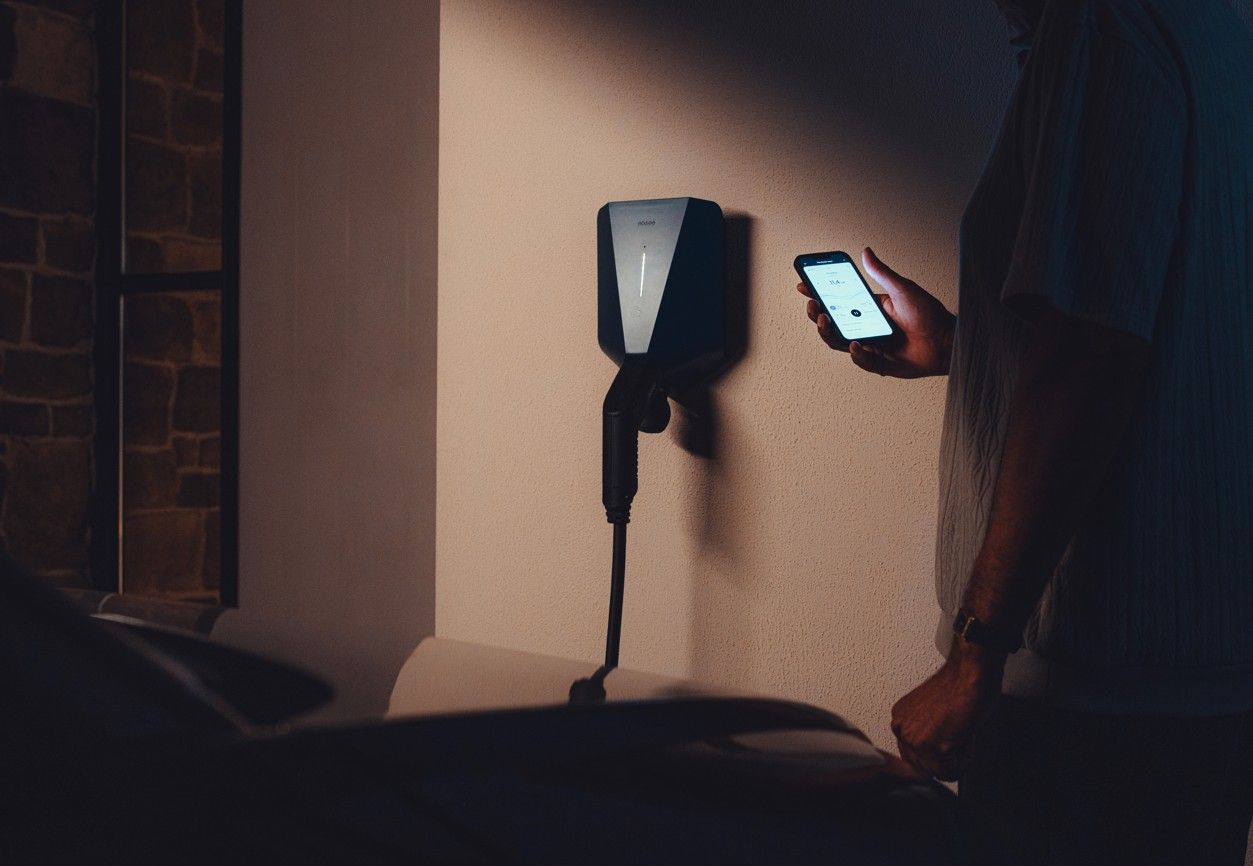
SOLAR ELECTRIC CAR CHARGER INSTALLER NEAR ME
If you are looking for a solar electric car charger installer near me in Derby or Derbyshire we're ideal, simply get in touch!
How Solar-Powered EV Charging Works
Solar EV charging is simpler than many people realise. You don’t need a completely separate charger, specialist panels or a complex new electrical system — you just need a solar-compatible smart charger and an electrical setup that can divert surplus solar power to your vehicle.
Here’s how it works:
1. Your Solar Panels Generate Electricity
During the day, your solar panels produce electricity that flows into your home.
This energy is used by appliances first, such as:
- Lighting
- Kitchen appliances
- Heating and hot water systems
- General household or workplace loads
2. Surplus Energy Is Detected
If your panels produce more energy than your home or business is using, this surplus would usually be exported back to the grid.
With a smart EV charger, that surplus can instead be directed straight into your vehicle.
3. Your EV Charger Diverts the Surplus
Solar-compatible chargers can sense when surplus energy is available and automatically charge your EV using that excess.
This is known as
solar diversion. The charger adjusts its power output dynamically depending on how much surplus you have, ensuring charging remains stable without affecting your home’s electrical use.
4. Grid Energy Fills the Gaps (If You Want It To)
If the solar surplus isn’t enough, your charger can either:
- top up from the grid automatically, or
- charge only from solar, depending on your settings
This gives you full control over how and when your EV draws power.
5. Works With or Without Battery Storage
You don’t need a battery for solar EV charging, but adding one can significantly increase the amount of solar energy that reaches your car — especially in the evenings.
Compatible With Most Modern Solar Systems
In most cases, your existing:
- inverter
- solar array
- smart meter
can be integrated with a suitable smart charger without major changes. We assess your current setup, check compatibility, and recommend the best configuration for your property.
Benefits of Solar EV Charging
Integrating solar power with your EV charger is one of the most effective ways to reduce running costs and make the most of renewable energy. Whether you’re charging at home or at a commercial property, the benefits are significant.
1. Lower Day-to-Day Running Costs
By using surplus solar energy, you reduce the amount of electricity you import from the grid. Over a year, this can lead to noticeable savings — especially for vehicles charged regularly during daylight hours.
2. Make Better Use of Your Solar Panels
Many solar homes export excess electricity back to the grid for only a small return. With solar EV charging, that surplus is used in your own vehicle, keeping more of the value within your home or business.
3. Faster Return on Investment for Solar Panels
Every unit of solar energy used to charge your EV increases the financial benefit of having solar panels. Instead of paying higher grid prices for charging, you’re using energy you produce yourself — helping your solar investment pay back sooner.
4. Reduced Reliance on the Grid
Charging your EV from solar reduces your dependence on grid energy, making you less affected by rising electricity prices or peak-time rates. This offers greater stability and predictability in your energy costs.
5. Environmentally Friendly
Charging your EV with renewable solar energy maximises the environmental benefits of electric driving. It reduces your carbon footprint and supports a more sustainable approach to energy use.
6. Works for Homes & Businesses
Solar EV charging is ideal for:
- Homeowners who work from home
- Businesses with daytime parking
- Commercial sites with large roof space
- Anyone who wants to lower long-term operating costs
7. Seamless Integration with Smart Chargers
Smart features allow you to:
- Track solar contribution
- Limit charging to solar only
- Mix grid and solar energy
- Optimise timing and output
This makes the system flexible, efficient and aligned with your energy goals.
SOLAR EV CHARGING
If you want solar EV charging in Derby or further afield in Derbyshire simply get in touch with us today to discuss your EV charging requirements!
Pairing EV Charging with Battery Storage
While solar panels can power your EV during the daytime, adding a home or commercial battery system takes your energy optimisation to the next level. Battery storage allows you to capture cheap or renewable electricity and use it later — including for EV charging — giving you far more control over costs and energy usage.
1. Store Cheap Overnight Electricity
Many homeowners and businesses use battery storage to take advantage of off-peak tariffs. The battery charges overnight at a lower cost, and that stored energy can be used the next day to:
- Run the home
- Reduce daytime grid usage
- Charge your EV at a much lower effective rate
This is especially beneficial in winter, when solar production drops.
2. Charge Your EV Using Stored Solar Energy
During the day, your battery stores any surplus solar energy that your home doesn’t use. Instead of exporting excess power back to the grid, the battery holds it until it’s needed.
Later — even after the sun has set — your charger can draw from the battery, giving you renewable EV charging long after daylight hours.
3. Smooth Out Energy Demand
EV charging can place a large demand on your electrical system at certain times. Battery storage helps by:
- Supplying extra power during peak household usage
- Reducing load on the main fuse
- Keeping your system balanced and efficient
When paired with smart load management, this creates a very stable charging environment.
4. Ideal for Homes with High Evening Usage
If you mainly arrive home after sunset, a battery ensures solar power generated earlier in the day isn’t wasted. Instead, it’s held until you're ready to use it, allowing renewable charging even at night.
5. Perfect for Businesses with Daytime Solar
Commercial properties — such as offices, warehouses and retail units — can benefit massively from storing solar energy and using it to charge fleet vehicles or staff cars later in the afternoon or evening.
6. Lower Your Long-Term Energy Bills
By using a mix of:
- Stored solar
- Stored off-peak electricity
- Live solar when available
you significantly reduce grid reliance, avoid peak-time prices and gain much more control over your monthly costs. Pairing solar with battery storage transforms your EV charging setup into a highly efficient, future-proofed energy system.
Solar-Compatible Smart Chargers
Not all EV chargers can work directly with solar panels, so choosing the right model is essential if you want to make the most of your renewable energy. Solar-compatible smart chargers are designed to detect surplus solar production and divert that energy to your vehicle automatically.
1. Real-Time Solar Tracking
A solar-ready charger communicates with your home’s solar inverter or an energy management system. It constantly monitors:
- How much solar energy you’re generating
- How much your home is currently using
- How much surplus is available for charging
The charger then adjusts its output in real time, ensuring your EV receives as much free renewable energy as possible.
2. Multiple Charging Modes
Most solar-compatible chargers offer flexible charging modes, including:
- Solar-only mode – charges the car exclusively using surplus solar
- Mixed mode – blends solar and grid power for a consistent charge
- Fast mode – uses full grid power for quicker charging when needed
This gives you full control depending on weather, time of day and driving plans.
3. Load Balancing for Safe Charging
Even with solar integration, load balancing remains important. A solar-compatible smart charger:
- Ensures your home isn’t overloaded
- Adjusts charging speed to match available capacity
- Maintains stable, safe charging at all times
This is particularly valuable for older properties or workplaces with high electrical demand.
4. App Control & Energy Insights
Solar-ready chargers come with detailed app dashboards showing:
- Solar contribution vs. grid contribution
- Real-time and historical charging data
- Energy savings
- CO₂ reduction estimates
- Live power flow visualisations
This makes it easy to understand how your energy is being used and where you’re saving.
5. Works Seamlessly With Battery Storage
When paired with a home or commercial battery, the charger can draw stored energy at times when solar production is low. The app shows how much power came from:
- Solar
- Battery
- Grid
This helps you fine-tune your system for maximum efficiency and optimal running costs.
6. Future-Proof Technology
Solar-compatible smart chargers are built to adapt as your energy setup evolves. If you add more panels, upgrade your inverter, expand your battery storage or install additional chargers, the system can be integrated without major changes. We assess your solar system, recommend the right charger and ensure it’s installed safely and configured correctly from day one.
How Much Solar Do You Need to Charge an EV?
One of the most common questions we’re asked is how much solar power you realistically need to make a meaningful difference to EV charging. The answer depends on your driving habits, the size of your battery and how much solar your property can generate — but we can offer some clear guidance.
Typical EV Charging Requirements
Most electric vehicles use between
6–12 kWh of electricity for a typical daily commute.
A full charge often requires
40–70 kWh, depending on battery size.
Typical Solar Output
A standard domestic 4 kWp solar system in Derbyshire can generate between:
- 2–4 kWh on a cloudy day
- 10–15 kWh on a sunny summer day
This means solar alone won’t usually charge your EV from empty to full in a single day — but that’s not how most people charge.
Realistic Solar EV Charging Scenarios
Most homeowners charge their EVs little and often. Here’s what that looks like with solar:
Scenario 1: Light Daily Driving (10–20 miles/day)
- Solar can cover a large part of your charging
- Some days may be 100% solar-powered
- Ideal for commuters and town driving
Scenario 2: Medium Usage (20–40 miles/day)
- Solar will still make a noticeable contribution
- Grid energy fills the remaining gaps
- Smart scheduling reduces costs further
Scenario 3: High Usage or Large Battery EVs
- Solar offset will help but won’t cover everything
- Combining solar + battery storage + off-peak tariffs gives the best results
- Works very well for households with predictable schedules
Seasonal Variation
Solar generation in Derbyshire is:
- High in spring and summer
- Moderate in autumn
- Lower in winter, when battery storage becomes more useful
This is why mixed-mode charging (solar + grid) is the most reliable option year-round.
Businesses Have an Advantage
Commercial properties often have:
- Large roof space
- Daytime occupancy
- Consistent solar availability during working hours
This makes solar EV charging especially cost-effective for:
- Offices
- Warehouses
- Retail sites
- Hospitality venues
- Small fleets
In Summary
You don’t need a huge solar system to benefit from solar EV charging. Even a modest array can significantly reduce running costs when paired with a smart charger and, optionally, battery storage.
Solar EV Charging for Businesses
For businesses across Derby and Derbyshire, combining solar panels with EV charging is a highly effective way to reduce operating costs, support staff and demonstrate a long-term commitment to sustainability. With the right setup, solar energy can offset a significant portion of your charging demand — especially during working hours when solar production is at its highest.
1. Make Use of Large Roof Space
Commercial buildings such as warehouses, offices and retail units often have large, unused roof areas ideal for solar panels. This allows businesses to generate substantial amounts of renewable electricity at no extra land cost.
That clean energy can then power:
- Staff vehicles
- Company cars
- Small fleets
- Visitor charging bays
- Warehouse or office operations
2. Lower Daytime Charging Costs
Most businesses operate during daylight hours, meaning your solar system is producing power at the same time staff or fleet vehicles are parked on-site. This maximises the value of your solar installation and reduces grid reliance at peak times.
3. Improve Fleet Efficiency
For businesses with vehicles on regular schedules, solar generation can supply a meaningful portion of their daytime charging. Paired with battery storage, fleets can also charge during the evening using stored solar or cheaper off-peak grid electricity.
4. Staff Benefits & Workplace Satisfaction
Offering free or discounted charging powered by your own solar system is a valuable employee benefit. It enhances your company’s reputation and helps attract and retain environmentally conscious staff.
5. Reduce Carbon Footprint & ESG Impact
Solar-powered charging significantly reduces the carbon footprint of your fleet and workplace. For businesses with environmental goals or ESG commitments, this is an impactful and measurable improvement.
6. Cost Recovery & Reporting
Smart commercial chargers allow businesses to:
- Track individual usage
- Recover costs from departments or staff
- Monitor fleet efficiency
- Produce reports for accounting or sustainability audits
7. Excellent ROI on Solar Systems
Using solar to power EV charging increases the return on investment from your solar installation. Instead of exporting surplus energy at a low rate, that electricity powers valuable business operations — especially transport.
Solar EV charging is one of the most powerful ways for businesses to reduce running costs and embrace renewable energy without disrupting daily operations.
Installation Requirements & Assessment
Integrating a solar system with EV charging requires careful assessment to ensure everything works safely and efficiently. Whether you already have panels installed or are planning a full solar + EV upgrade, we carry out a thorough evaluation before installation.
1. Checking Solar System Compatibility
We start by reviewing your existing solar setup, including:
- Solar panel output (kWp)
- Inverter type and capacity
- Age and condition of the system
- Whether you have battery storage
- Your export tariff (if applicable)
Most modern solar systems are compatible with solar-enabled EV chargers, but older inverters may require additional equipment to integrate properly.
2. Assessing Your Electrical System
Your consumer unit and wiring need to support a dedicated EV charging circuit. We check:
- Spare ways in the fuse box
- RCD/RCBO protection
- Surge protection devices (SPD)
- Bonding and earthing arrangements
- Load capacity across the property
If upgrades are required, we’ll explain them clearly.
3. Wi-Fi & Smart App Requirements
Solar-compatible chargers rely on a stable Wi-Fi or network connection for:
- Solar monitoring
- App control
- Scheduling
- Load balancing
We check signal strength at the proposed installation location and offer solutions if boosters or hardwired connectivity are needed.
4. Solar Diversion Hardware
Depending on your charger and inverter, you may require additional hardware such as:
- A CT clamp to measure solar export
- An energy management hub
- Inverter integration modules
We supply and install everything needed to ensure accurate solar tracking.
5. Compatibility With Battery Storage
If you have, or plan to add, a battery system, we check:
- Inverter integration
- Load priorities
- Charging and discharging behaviour
- Whether your system can support EV diversion
- How your charger should be configured
This ensures your battery, solar and charger all work together correctly.
6. Site-Specific Considerations
For homes and businesses, we also assess:
- Cable routes
- Driveway or parking layout
- Mounting locations
- Weatherproofing needs
- Safety requirements
This ensures your final setup is neat, safe and well integrated into the property.
MOST COMMON SOLAR EV CHARGER QUESTIONS:
Why Choose Us for Solar + EV Integration
Integrating solar power, battery storage and EV charging requires a careful blend of electrical expertise and smart energy knowledge. Unlike installers who focus on just one part of the system, we understand the full picture — how your solar panels, inverter, consumer unit, battery storage and EV charger all work together as a single energy ecosystem.
As qualified electricians, we ensure your installation meets the latest wiring regulations and operates safely under all conditions. We take the time to assess your property properly, explain your options clearly and design a setup that maximises efficiency without compromising safety or performance.
Working as part of the Derbyshire Specialists Group also gives you access to a coordinated team capable of handling any related work — from electrical upgrades and cable routing to making good after installation. Everything is managed in-house, providing a seamless experience from start to finish.
Customers choose us because we offer:
- Expert knowledge of solar-compatible smart chargers
- Safe, compliant electrical work from fully qualified professionals
- Clear advice on solar diversion, battery storage and load balancing
- Tailored designs based on your property, goals and energy habits
- Neat, discreet installations that look good on driveways or car parks
- Reliable aftercare, support and troubleshooting
- Honest recommendations with no unnecessary upselling
Whether you already have solar panels or you’re planning a full solar + EV upgrade, we’ll make sure your system is integrated properly, works efficiently and supports your long-term energy goals.
Book a Solar & EV Charging Assessment
If you’re looking to reduce your EV charging costs and make better use of renewable energy, we’re here to help. Whether you already have solar panels installed or you’re planning a full solar + battery + EV charging upgrade, we’ll assess your property and recommend the most efficient setup.
We install EV chargers in homes and businesses across Derby and Derbyshire, including Allestree, Littleover, Mickleover, Chaddesden, Spondon, Oakwood, Belper, Ripley, Ilkeston and the surrounding areas. Our assessments are straightforward and focused on helping you understand exactly what’s possible for your property.
Get in Touch to Arrange Your Assessment
- Send us a few photos of your solar system or consumer unit
- Ask us to check your solar compatibility
- Learn how much solar could charge your EV
- Find out whether battery storage could benefit you
- Arrange an on-site survey for complex setups
We’ll give you clear, honest advice and design an energy system that helps you charge your EV more efficiently, sustainably and affordably.
Get in touch today to book your solar & EV charging electrical assessment or request a no-obligation quote.
Derbyshire Electrical Specialists provide:
Electric Vehicle Charger Installers Derby , Electric Vehicle Charger Installers Allestree, Electric Vehicle Charger Installers Ashbourne, Electric Vehicle Charger Installers Alfreton, Electric Vehicle Charger Installers Belper, Electric Vehicle Charger Installers Breaston, Electric Vehicle Charger Installers Clay Cross, Electric Vehicle Charger Installers Heanor, Electric Vehicle Charger Installers Hilton, Electric Vehicle Charger Installers Ilkeston, Electric Vehicle Charger Installers Long Eaton, Electric Vehicle Charger Installers Matlock, Electric Vehicle Charger Installers Ripley, Electric Vehicle Charger Installers Sandiacre, Electric Vehicle Charger Installers South Normanton, Electric Vehicle Charger Installers Somercotes, Electric Vehicle Charger Installers Swadlincote,